- Garantie à vie
- 100% Paiements sécurisés
- Livraison gratuite à partir de 350 euros
- Expédition rapide avec DHL Express
- Réservé aux professionnels
- Aucune commande minimale n'est requise
- Moissanite avec certificat GRA
- PERCEURS VÉRIFIÉS UNIQUEMENT

What each stone family changes on the bench, at the counter and in your stock.
By The Tremun Team · Barcelona, Spain · Updated 18 November 2026
One label can hide very different materials. "Swarovski" can mean a zirconia or a glass. "Zirconia" can mean very different cuts and colour control. This guide to piercing stones is for piercers and studio buyers. It covers seven stone families and the job each one does. By the end, you can name every stone exactly and choose a setting. You can also give a care card, match a stone to a client and write a clear supplier email. It comes from more than 10 years of experience supplying professional piercers across Europe.
En bref
Five rules for choosing stones
Lab-grown moissanite rates 9.25 on the Mohs scale and has strong fire. Cubic zirconia and Swarovski Zirconia rate 8.5. Swarovski crystal is glass, at 5–6. Natural stones range from 2 to 9, and each piece is different.
Lab-grown moissanite
Mohs 9.25
Very hard, strong fire, white sparkle for daily wear.
Natural stones
Mohs 2–9
Colour and pattern from nature; every piece is different.
Swarovski Zirconia
Mohs 8.5
Precise cuts and colour that stays the same.
Know the family before you judge the stone.
Piercing stones fall into seven families. They are not levels of quality. Each family does a different job for a different client.
Opal has its own section, because origin and care need extra attention. "Lab-grown" describes where a stone comes from, not its quality. Three jobs help you hold all seven families in mind:
Use this reference at the bench or when you plan an order. Each card follows the same order, so you can compare families quickly.
Stone families
Seven stone families compared
Mohs9.25
Mohs6.5–9
Mohs2–7.2
Mohs7.5–8
Mohs8.5
Mohs8.5
Mohs5–6
Typical Mohs values from mineral references and maker data. Check the product page for each piece.
Hardness resists scratches. Toughness resists chips. They are not the same thing.
The Mohs scale ranks scratch resistance from 1 to 10. A higher stone scratches a lower one. Find the stones you stock most on the scale below.
Hardness
Mohs hardness, 1 = softest, 10 = hardest
Toughness is how well a stone resists chipping and breaking. Cleavage is a direction along which a stone can split.
A hard stone can still split with a knock. Topaz rates 8 but has perfect cleavage in one direction. Moonstone has poor toughness and two cleavage directions. Opal has poor to fair toughness.
Ruby and sapphire have excellent toughness and no cleavage. Quartz, such as amethyst, has good toughness. Chalcedony stones, such as chrysoprase and onyx, are tough too.
Brilliance is the white light a stone returns. Fire is the rainbow flash, and it comes from dispersion.
Lab-grown moissanite has a dispersion of 0.104. Cubic zirconia measures 0.060, and Swarovski gives 0.065 for its zirconia. So lab-grown moissanite shows the stronger rainbow fire.
Lab-grown moissanite is its own stone, with its own hardness and fire.
Lab-grown moissanite is silicon carbide. It rates 9.25 on the Mohs scale, the hardest family in this guide. Its refractive index is 2.65 to 2.69, and its dispersion is 0.104.
It is doubly refractive. Under a loupe, the facet edges can look slightly doubled. This is normal for the material.
At the bench, it is easy to work with. GIA lists ultrasonic and steam cleaning as suitable. One major maker reports its stones stay intact when tested at 2,000 °F (about 1,090 °C). GIA also notes it is less likely to attract grease than diamond.
Some trade bodies prefer the term "synthetic". At Tremun, we write "lab-grown moissanite", and we name it in full.
At the counter, lab-grown moissanite is the white stone for maximum sparkle in daily wear. In 18K gold, Trinity - White Moissanite holds a cluster of lab-grown moissanite. It is designed and made in Italy, hand polished, mirror finish.
Lab-grown moissanite
Lab-grown moissanite in titanium ASTM F-136
A natural stone is chosen for its character, not its uniformity.
Natural stones formed in the earth, so no two are identical. They fall into two groups that behave differently at the bench.
Faceted gems are cut to bring light and colour through the stone. Hardness ranges widely.
A small natural ruby gives a strong red point in a curated ear. In 18K gold, the Prong Push Pin - Natural Ruby holds a 2 mm natural ruby in three prongs.
These stones are usually cut as cabochons or with flat, polished faces. Their effect moves with light and angle.
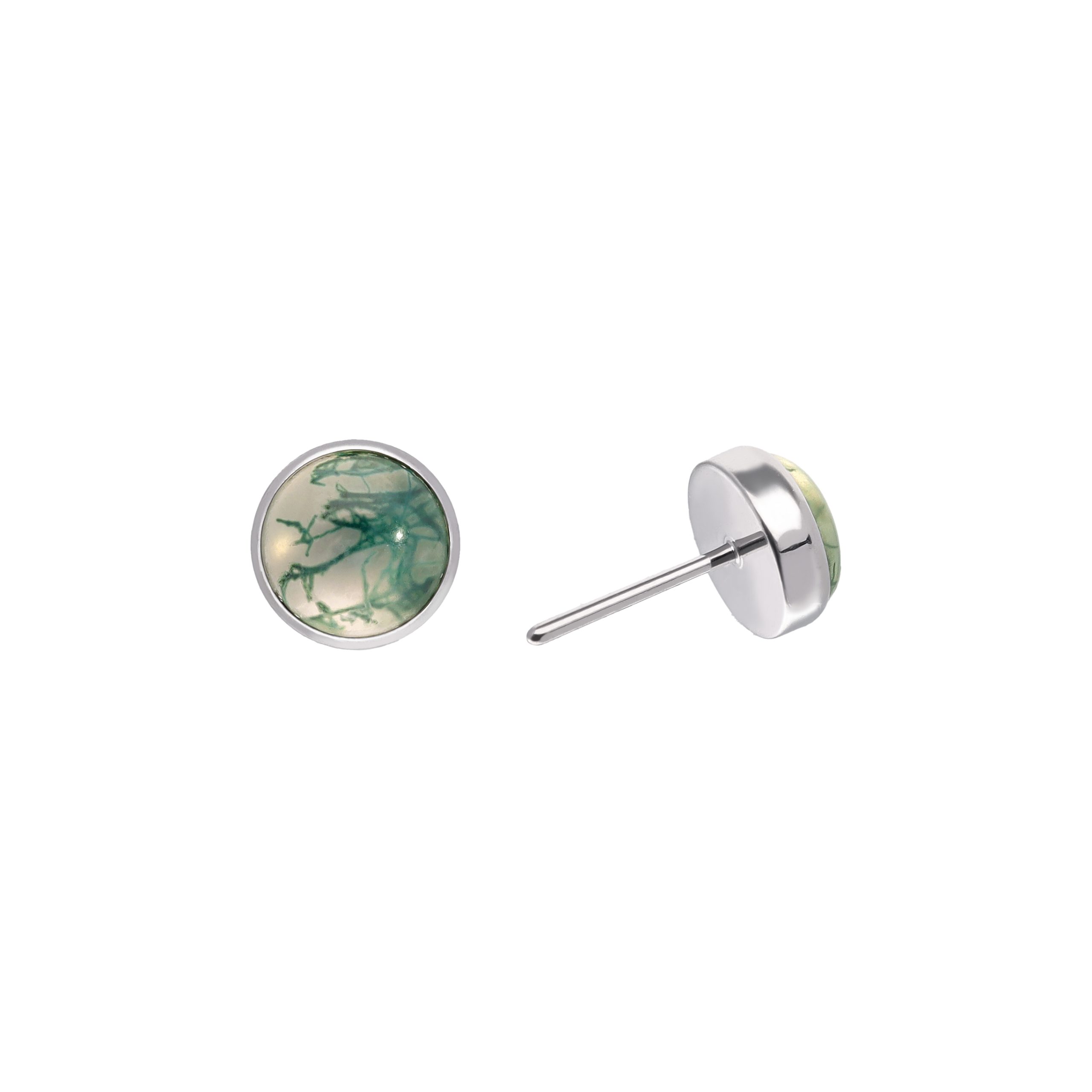
Finish is part of a stone's name. Améthyste sablée has a matte, frosted surface instead of a polished shine.
Pattern, inclusions and colour change from piece to piece. The product photo shows a typical piece, not the exact stone. Screens also show colour differently.
If the stone looks different from the photo, the client asks you, not the supplier. So set the expectation early. Variation is the reason many clients choose natural stones.
Before the fitting
Tell the client: "This stone is natural. Yours will look a little different from the photo." Show the real piece under studio light before you fit it.
Across the gem trade, many stones are treated: heated, irradiated, dyed, impregnated, filled or coated. In general, GIA notes that most blue topaz on the market is irradiated and heated. The International Gem Society notes that onyx in the trade is almost always dyed. These are trade-wide facts, not statements about a specific piece.
Treatment changes care. A filled ruby needs much more care than an untreated one. Abrasive cleaners or buffing wheels remove a surface coating. Ask your supplier about each stone before you clean or sterilise it.
Ask first
Treatment status changes care. Ask your supplier for each stone. Tremun answers on WhatsApp: +34 675 014 620.
Natural stones
Natural stones in titanium ASTM F-136
Natural stone: colour and pattern vary.
A lab-grown gem has the same chemistry as the natural stone.
Lab-grown emerald is beryl, the same mineral as natural emerald. GIA describes lab-grown gems as having essentially the same chemical, physical and optical properties. Emerald rates 7.5–8 on the Mohs scale.
Two growth methods exist: flux and hydrothermal. Each can leave its own small inclusions.
Care is less clear. GIA calls ultrasonic and steam risky for oiled or filled natural emerald. That advice does not automatically apply to lab-grown emerald. We found no care guide written for lab-grown emerald. So treat it as "check first" and ask your supplier.
Lab-grown emerald gives a clear green colour point. Name it in full at the counter.
Three names, three materials. Never mix them up on a label.
Three names
Cubic zirconia is zirconium oxide made in a lab from melted powders. GIA gives it a Mohs hardness of 8.5. Gemmological references give a refractive index of 2.15 and a dispersion of 0.060.
GIA lists ultrasonic and steam cleaning as suitable. It also notes that colourless cubic zirconia may yellow over time. Cut and colour control vary between makers, so ask your supplier about consistency.
Cubic zirconia does one job very well: a wide range of shapes and colours. Always write "cubic zirconia" in full on labels.
Swarovski Zirconia is cubic zirconia made by Swarovski. In Swarovski's own data, it rates 8.5 on the Mohs scale. Its refractive index is 2.2, and its dispersion is 0.065.
Swarovski states its zirconia comes in more than 30 colours. It describes the colour as durable and permanent, and consistent across sizes and shapes. It also states the material withstands very high temperatures.
One bench point comes from Swarovski too. Polishing or scratching the back of the stone can change its colour appearance. Keep abrasives away from the back of a set stone.
Swarovski Zirconia colours in our catalogue
Six Swarovski Zirconia colours from the Tremun catalogue, named as on the product pages.
Screen colours are approximate. Check the photo on each product page.
Swarovski crystal is glass. Swarovski calls it crystal glass. Swarovski states that its current crystal formula is lead-free, with a few listed colour exceptions.
In Swarovski's own table, its crystal rates 5–6 on the Mohs scale. Its zirconia rates 8.5. So crystal scratches sooner and can chip at the facet edges. Some crystal effects are thin surface coatings, so treat them gently.
Swarovski gives clear care advice for crystal. Remove it before hand washing, swimming, perfume and lotion. Avoid knocks. Polish with a lint-free cloth.
Swarovski crystal does its own job: strong colour and light effects for statement looks. Label it "Swarovski crystal", never "zirconia". Ask your supplier which of the two each piece uses.
Branded zirconia
Swarovski Zirconia in titanium ASTM F-136
For French readers
In French shop language, "zircon" often means cubic zirconia. Zircon is a different natural mineral. Write "oxyde de zirconium" or "zircone cubique" on labels.
Opal needs gentle handling, whatever its origin.
Opal is soft for a gem. GIA gives it 5–6.5 on the Mohs scale, with poor to fair toughness. Natural opal contains water, up to about 20% according to GIA. In natural opal, play of colour comes from stacked silica spheres.
GIA advises against ultrasonic cleaning for opal. Heat or a sudden temperature change can crack it. Intense light can cause fine cracking, called crazing. Clean it with warm soapy water only, and keep it away from harsh chemicals.
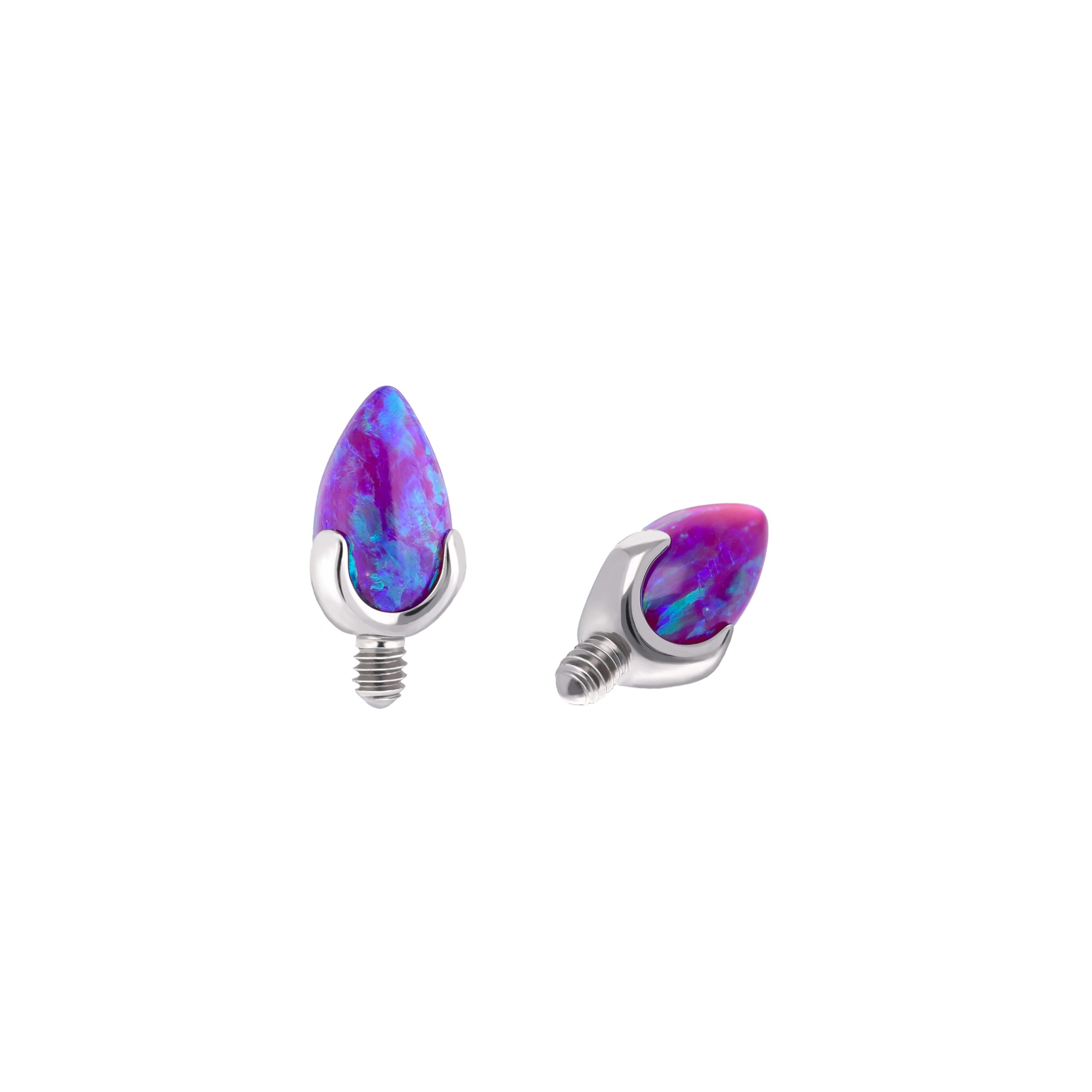
Opal on the market can be natural or lab-created. The two need different descriptions at the counter. Tremun's catalogue names include White, Purple, Blue and Light Peony Opal. For Dragon Egg - White, check the product page for stone details.
Origin
Opal can be natural or lab-created. Check the product page, or ask us on WhatsApp: +34 675 014 620, before you describe it to a client.
Choose the setting for the stone's weak point.
Stones should be held by the metal, never glued. A prong or bezel setting holds the stone in the metal itself.
Watch topaz in particular. Gem references note that some prongs can stress topaz along its cleavage plane.
Match the top to the post and the placement. A tall prong top snags hair and scarves. Tremun tops are sold without post, so check the pin or thread size listed. See our guide to internally threaded body jewellery.
Use this routine when an order arrives, and again before each fitting.
If a claw looks lifted, do not push it back yourself. Contact your supplier first.
The metal colour changes how the stone reads.
Titanium ASTM F-136 gives a cool grey frame and light weight. Tremun titanium is DFARS-compliant and sourced from France. You can check how ASTM F-136 titanium is verified and see our mill certificates.
Yellow 18K gold warms the stones it holds. Our 18K pieces in this guide, Trinity and the Natural Ruby push pin, are designed and made in Italy. Both are hand polished, mirror finish.
Use colour to plan the look:
Ask the client first: which metal do you already wear? Then choose the stone.
Care follows the softest or most sensitive part of the piece.
All our sources agree on one method: warm water, mild soap and a soft brush. Rinse at a similar temperature. Check the table before any ultrasonic cycle.
| Pierre | Polishing cloth | Warm soapy water | Ultrasonic |
|---|---|---|---|
| Lab-grown moissanite, cubic zirconia | Yes | Yes | Yes |
| Ruby, sapphire, garnet, amethyst, morganite | Yes | Yes | Check first |
| Topaze | Check first | Yes | No |
| Moonstone, sunstone | Yes | Yes | No |
| Labradorite, moss agate, included quartz, chrysoprase, onyx | Yes | Yes | Check first |
| Opal, seraphinite | Check first | Yes | No |
| Lab-grown emerald | Yes | Yes | Check first |
| Swarovski Zirconia | Yes | Yes | Check first |
| Swarovski crystal | Yes | Check first | Check first |
Check first: check the product page or ask your supplier. Tremun answers on WhatsApp. Treated or coated stones may need extra care. Sources: GIA care guides and Swarovski care advice.
Check each new order under a loupe. GIA warns that heat or sudden temperature change can break moonstone, topaz and opal. Keep heat away from chrysoprase, seraphinite and treated stones too.
Before sterilisation, check the stone against your studio's protocol and the maker's guidance. If you cannot identify a stone, ask the supplier first.
Give each client four short lines:
A cloudy stone makes the whole piece look dull. Often it is a film of skin oil or product. Warm soapy water and a soft brush usually bring the shine back.
One sentence per stone. Then let the client hold it.
Clients do not need gemmology. They need one clear, true reason per stone. Try these lines.
At the counter
Then show the difference. Put lab-grown moissanite, Swarovski Zirconia and one natural stone under the same lamp. The client sees three jobs.
Start with the client's priority: sparkle, character or colour. The family follows. Which of these clients walks into your studio most often?
| Client or situation | Stone and why |
|---|---|
| Maximum white sparkle, daily wear | Lab-grown moissaniteMohs 9.25 and strong fire; easy to clean |
| Wants a one-of-a-kind look | Natural opaque and phenomenalNo two patterns or flashes are the same |
| Wants a strong colour point | Natural rubyLab-grown emeraldDeep, clear colour in a small stone |
| Matching pairs or a colour story | Swarovski ZirconiaColour consistent across sizes and shapes |
| Wants many shapes and colours | Cubic zirconiaA wide choice of shapes and colours |
| Statement look, light effects | Swarovski crystalStrong colour effects; gentle wear and care |
| Often catches jewellery | Any stone in a bezelThe rim protects the stone's edge |
| Loves play of colour | OpaleProtected placement; warm soapy water only |
First pill = first choice; second pill = alternative. Your bench experience always comes first.
Not sure? Let the client compare two families side by side on a white card.
Give every stone family a job in your tray.
Stock by role, not only by stone. One simple starting point:
Keep the same design in two or three stone options, so the client chooses the stone. Reorder Swarovski Zirconia by colour name. Reorder natural stones by photo, because each piece differs.
Label each slot with the stone, any stone finish and the metal. Example: "Natural moss agate · titanium ASTM F-136". With no minimum order at Tremun, you can test a family with a few pieces and reorder what sells.
Write the stone name on the invoice exactly as you will say it at the counter. Screenshot this list and use it for your next stone order.
Before you order stones
Questions to ask your stone supplier
Send these questions with your order. Keep the answers with the invoice.
Questions about a Tremun stone? Ask us on WhatsApp: +34 675 014 620
At Tremun
Questions about a Tremun stone, a cut or a setting? Ask us on WhatsApp: +34 675 014 620. Titanium mill certificates are on our page des certificats.
All three stone jobs, in titanium ASTM F-136 and 18K gold.
Tremun works with every family in this guide, from lab-grown moissanite to opal. Our titanium is ASTM F-136, DFARS-compliant and sourced from France. In 18K gold, Trinity and the Natural Ruby push pin are designed and made in Italy, hand polished, mirror finish.
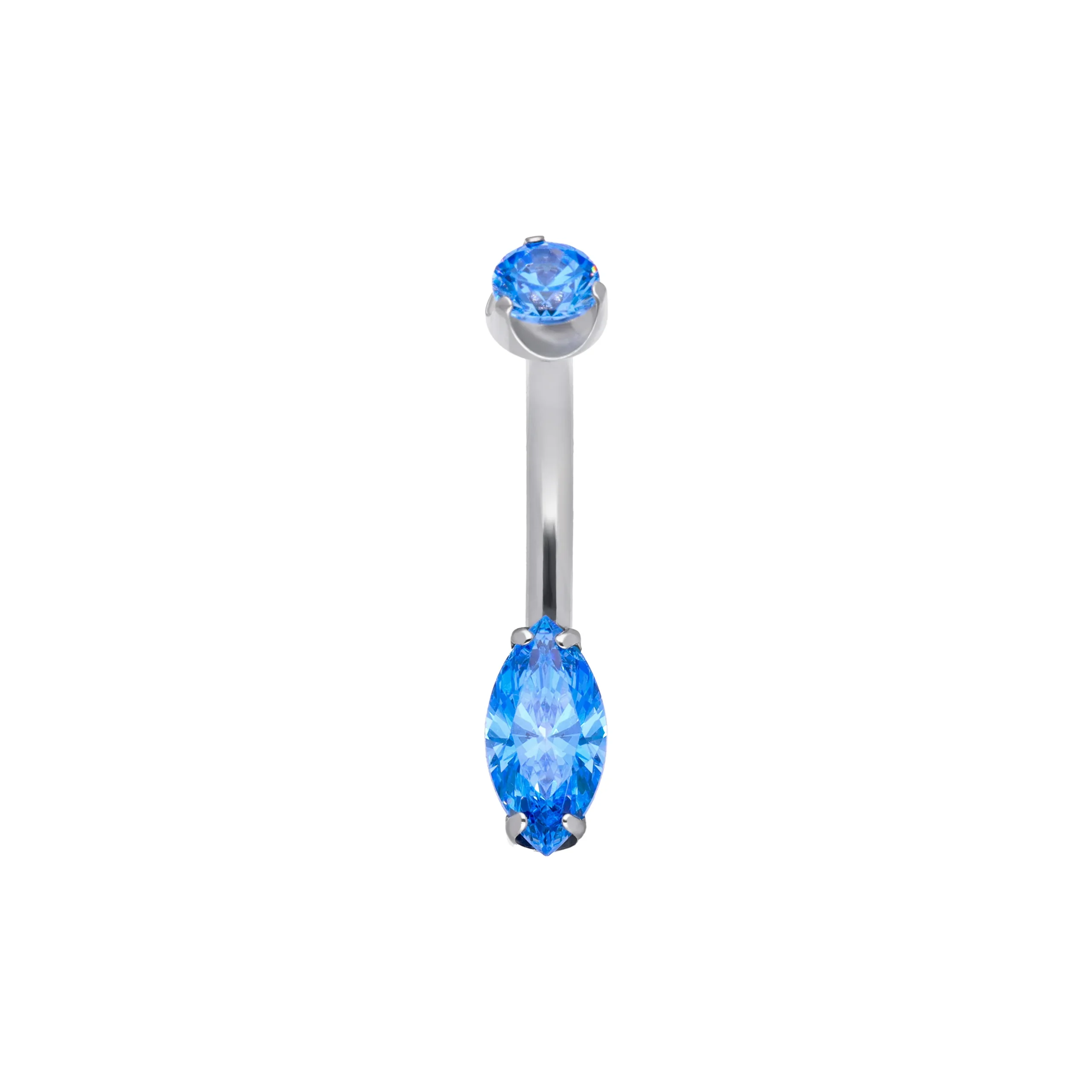
For a first order, try one piece per job. Start with Capu Moissanite White, Emi in natural rainbow moonstone and Vespera - Marquise Cut - Arctic Blue. More than 3,500 studios trust Tremun.
Tremun · Titanium ASTM F-136 and 18K gold
See all three stone jobs in real pieces
Lab-grown moissanite, natural stones, Swarovski Zirconia and opal, in titanium and 18K gold.
Tops are sold without post. Prices are visible to approved accounts. Natural stones: colour and pattern vary.
For professional piercers
See prices for Tremun stone jewellery
Tremun sells only to professional piercers and studios. Accounts are approved within 24 hours. Then you see prices for every stone family.
They do different jobs. Lab-grown moissanite rates 9.25 on the Mohs scale and has a dispersion of 0.104, so it shows strong fire. Cubic zirconia rates 8.5, with a dispersion of 0.060, and comes in a wide range of shapes and colours. GIA lists both as suitable for ultrasonic cleaning. Choose by the client's priority.
Swarovski Zirconia is cubic zirconia made and cut by Swarovski. Swarovski crystal is glass, which Swarovski calls crystal glass. In Swarovski's own table, its zirconia rates 8.5 on the Mohs scale and its crystal rates 5–6. So crystal scratches sooner and needs gentler care. Ask your supplier which material each piece uses.
Neither is better in every case. A natural stone formed in the earth, so its colour and pattern are unique. A lab-grown gem has essentially the same chemistry and properties as the natural gem. Choose a natural stone for character. Choose lab-grown moissanite or a lab-grown gem when the client wants a controlled look.
Natural stones vary in colour, pattern and inclusions from piece to piece. A product photo shows a typical piece, not the exact stone you receive. Screens also show colour differently. Tell the client before the fitting that their stone will look a little different. Show the real piece under studio light.
GIA advises against ultrasonic cleaning for opal, moonstone, sunstone and topaz, and for coated stones. Seraphinite is very soft, so keep it out too. For other natural stones, Swarovski Zirconia and Swarovski crystal, check first with your supplier. GIA lists lab-grown moissanite and cubic zirconia as suitable. For most stones, warm soapy water and a soft brush are the gentlest method.
Opal on the market can be natural or lab-created, and the two need different descriptions. Check the product page for each Tremun opal piece, or ask us on WhatsApp: +34 675 014 620. Whatever its origin, handle opal gently. GIA advises warm soapy water only, no ultrasonic and no heat or sudden temperature change.
A bezel gives the most protection to soft stones and stones that split easily. Examples are opal, moonstone, labradorite and seraphinite. The metal rim protects the stone's edge and snags less. Phenomenal stones also need a domed cabochon, and a bezel protects that dome. Keep prongs for hard faceted stones such as lab-grown moissanite, sapphire and zirconia.
Yes. Titanium ASTM F-136 gives a cool grey frame, so white stones look calm and phenomenal stones stand out. Yellow 18K gold warms the stone, and white stones on it show strong contrast. Our 18K Trinity and Natural Ruby push pin are designed and made in Italy, hand polished, mirror finish. Ask the client which metal they already wear.
Ask for the exact stone name, and whether it is natural, lab-grown or glass. Ask about treatments, origin and ultrasonic or heat limits. For Swarovski, ask whether it is Zirconia or crystal, and which documentation proves authenticity. Ask how the stone is held, and whether colour matches between orders. Tremun answers on WhatsApp: +34 675 014 620.
Tremun sells only to professional piercers and studios. Register at tremunpiercing.com/registration/. Accounts are approved within 24 hours, and then prices are visible. There is no minimum order, with free DHL Express from €350 (VAT incl.). You can choose stone pieces in titanium ASTM F-136 and in 18K gold.
The Tremun Team
 English English
 Croatian
 Dutch
 French
 German
 Italian
 Romanian
 Spanish
 Ukrainian