- Garanzia a vita
- 100% Pagamenti sicuri
- Spedizione gratuita per ordini superiori a 350 euro
- Spedizione veloce con DHL Express
- Solo per i professionisti
- Nessun ordine minimo richiesto
- Moissanite con certificato GRA
- SOLO PIERCER VERIFICATI

Gauge, length and diameter in millimetres, placement by placement.
By The Tremun Team · Barcelona, Spain · Updated 18 November 2026
This is a piercing size chart for the bench, not a consumer chart. Every piece carries three numbers: thickness, length or inner diameter, and top size. Each label can mean something different from one supplier to the next. A wrong reading means a short post, a tight ring or stock that stays in the drawer. This guide helps you convert gauges, read product pages, plan initial and later sizes, and build a size stock. It comes from more than 10 years of experience supplying professional piercers across Europe.
In breve
Four rules for ordering the right size
Piercing jewellery is sized by thickness (gauge or mm), wearable length for bars and posts, and inner diameter for rings. In Europe, think in millimetres first. Anatomy decides the final size: measure the client, not the chart.
16G
1.2 mm
Ear cartilage, septum, eyebrow, lip.
14G
1.6 mm
Navel, tongue, nipple, industrial.
18G / 20G
1.0 / 0.8 mm
Nostril and many lobes.
Already approved? See Yuki tops in four sizes.
Gauge is a label. Millimetres are the measurement.
Gauge (G, ga) is the thickness of the part that sits in the piercing. Body jewellery uses the American Wire Gauge scale (AWG), once called Brown & Sharpe.
The scale runs backwards: a higher number means thinner metal. So 18G is thinner than 16G. Gauge never describes length, diameter or top size.
Europe works in millimetres. Jewellery made outside the US is often listed in mm first. Many US pages lead with the gauge, and some give lengths in inches. "1.2 mm" and "16G" can describe the same post. This guide gives mm first, with the gauge next to it.
Read the mm column, not the G column.
Each gauge has two values. The exact value comes from the AWG formula. The common label is the rounded figure that makers print. Rows marked "Common" cover most piercings.
| Calibro | Common label (mm) | Exact AWG (mm) | Typical piercing use |
|---|---|---|---|
| 20G | 0.8 mm | 0.81 mm | CommonNostril, lobe |
| 18G | 1.0 mm | 1.02 mm | CommonNostril, lobe, thin cartilage |
| 16G | 1.2 mm (some labels: 1.3 mm) | 1.29 mm | CommonEar cartilage, septum, eyebrow, lip |
| 14G | 1.6 mm | 1.63 mm | CommonNavel, tongue, nipple, industrial |
| 12G | 2.0 mm | 2.05 mm | Some navel and nipple work |
| 10G | 2.5 mm (2.4–2.6 mm seen) | 2.59 mm | Larger curved barbells, stretched piercings |
| 8G | 3.2 mm (some labels: 3.0 mm) | 3.26 mm | Stretched piercings |
| 6G | 4.0 mm | 4.12 mm | Stretched piercings |
| 4G | 5.0 mm | 5.19 mm | Stretched piercings |
| 2G | 6.0 mm (some labels: 6.5 mm) | 6.54 mm | Stretched piercings |
| 0G | 8.0 mm | 8.25 mm | Stretched piercings |
| 00G | 9–10 mm (varies by supplier) | 9.27 mm | Stretched piercings |
Exact values from the AWG formula, rounded. Labels vary by supplier: check the mm value on the product page.
Bookmark this chart, or take a screenshot for your phone.
16G is 1.2 mm in piercing jewellery. The exact AWG value is 1.29 mm, so some labels say 1.3 mm.
Both labels describe the same nominal size. Most makers print 1.2 mm; an engineering wire table rounds to 1.3 mm. Other gauges round differently too: 10G is labelled 2.4, 2.5 or 2.6 mm, and 8G 3.0 or 3.2 mm.
The practical rule: when you mix suppliers, compare the mm values. If a page lists only the gauge, ask before you order. Many Tremun product pages list both. The Labret Post 16G, for example, reads 1.2 mm (16G).
Measure only the part that sits in the piercing.
Sellers word their definitions in different ways. The drawings show the common practice across published maker size guides. Every number later in this guide reads the same way.
How it is measured
Between the inner faces of the balls.
From the disc face to the base of the top. Disc size is separate.
A straight line between the balls, not along the curve.
Across the inside at the widest point. The wall is the gauge.
Wearable length is the part of the bar between the ends.
For a straight barbell, measure from the inner face of one ball to the inner face of the other. Leave the balls on, and do not count external threads.
For a labret post, measure from the inner face of the flat disc to the base of the top. The disc is a separate figure, often 3, 4 or 5 mm. The top is separate too. A 3 mm stone and a 4 mm stone can sit on the same 8 mm post.
At Tremun, the Labret Post 16G (1.2 mm) runs from 3 to 12 mm. So does the Labret Post 14G (1.6 mm). Both have a 4 mm flat disc. The Micro Labret Internally Threaded has a smaller 3 mm disc, in 5–9 mm.
Tremun lists length as shown on each product page. If the definition is unclear for your use, ask us on WhatsApp: +34 675 014 620.
Curved bars are measured in a straight line between the ends.
Place the calliper jaws on the inner faces of the two balls. Read the straight distance, not the length along the curve. A navel bar follows the same rule; the top or drop is a separate size.
At Tremun, the Navel Post is 14G in 8, 10 and 12 mm. The Navel Post – PVD Gold-Tone comes in the same lengths, sold without top. The Large Curved Barbell comes in 12G (2.0 mm) or 10G (2.5 mm). It is 12 or 14 mm long, with 4 mm balls.
Ring size is the inner diameter, never the outer diameter.
Measure straight across the inside of the ring, at its widest point. The outer diameter adds the metal on both sides. So an 8 mm ring in 1.2 mm is 10.4 mm across the outside.
Some shaped septum clickers list two inside dimensions: width and drop. There is no single trade definition of "drop", so read each product page. A circular barbell is sized by the inner diameter of the circle.
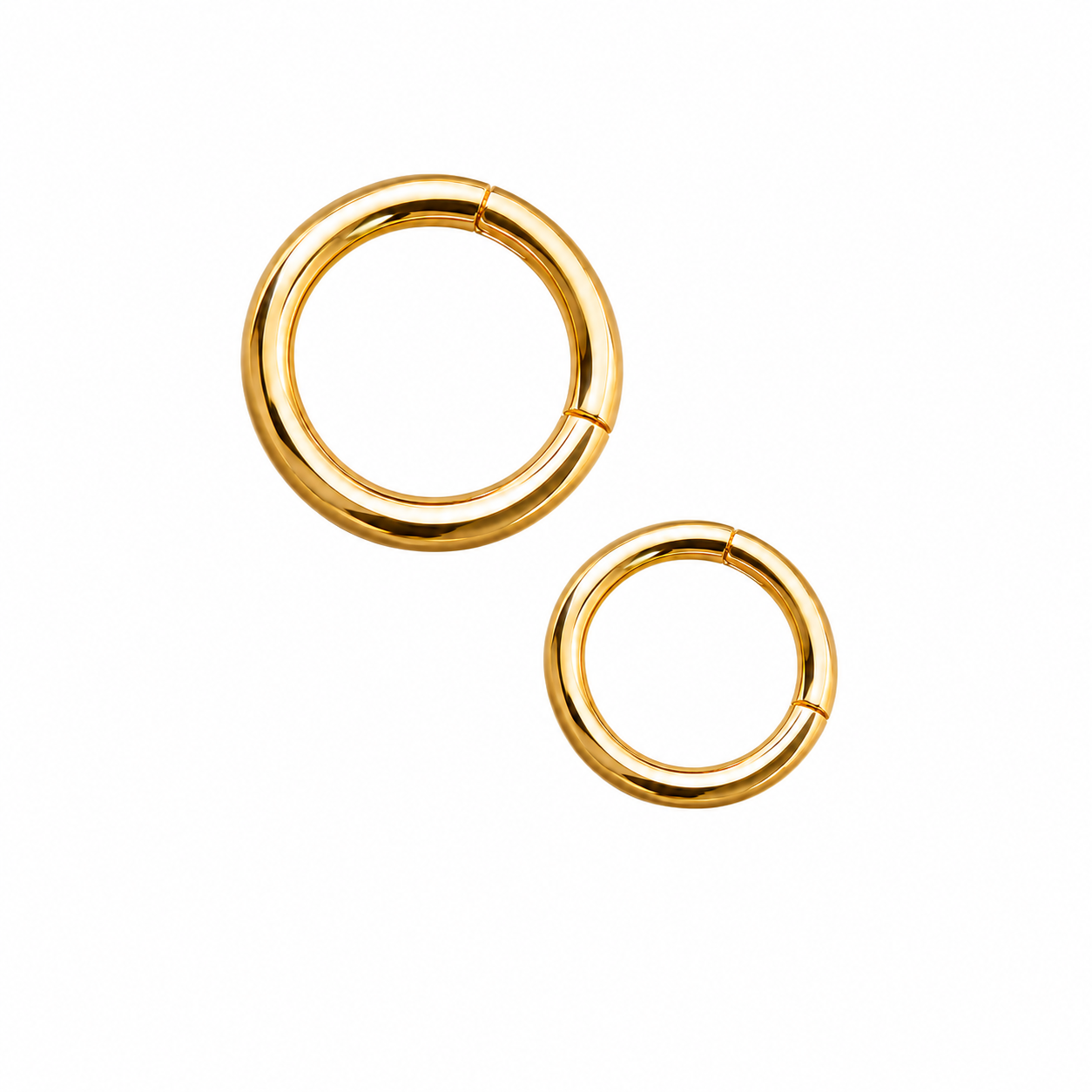
At Tremun, the Septum Clicker Tina White is 16G with a 10 mm diameter. The Clicker Ring - 18K Yellow Gold 16G comes in 6, 7, 8 and 9 mm. The Circular Barbell Big Gauge runs from 10G to 4G, in 14–18 mm.
Pick the post for the piercing and the top for the look.
A top is sized by its face: the stone or the design. Threadless tops carry a thin pin, often 25G. The post gauge, 16G or 14G, is the number that sits in the piercing.
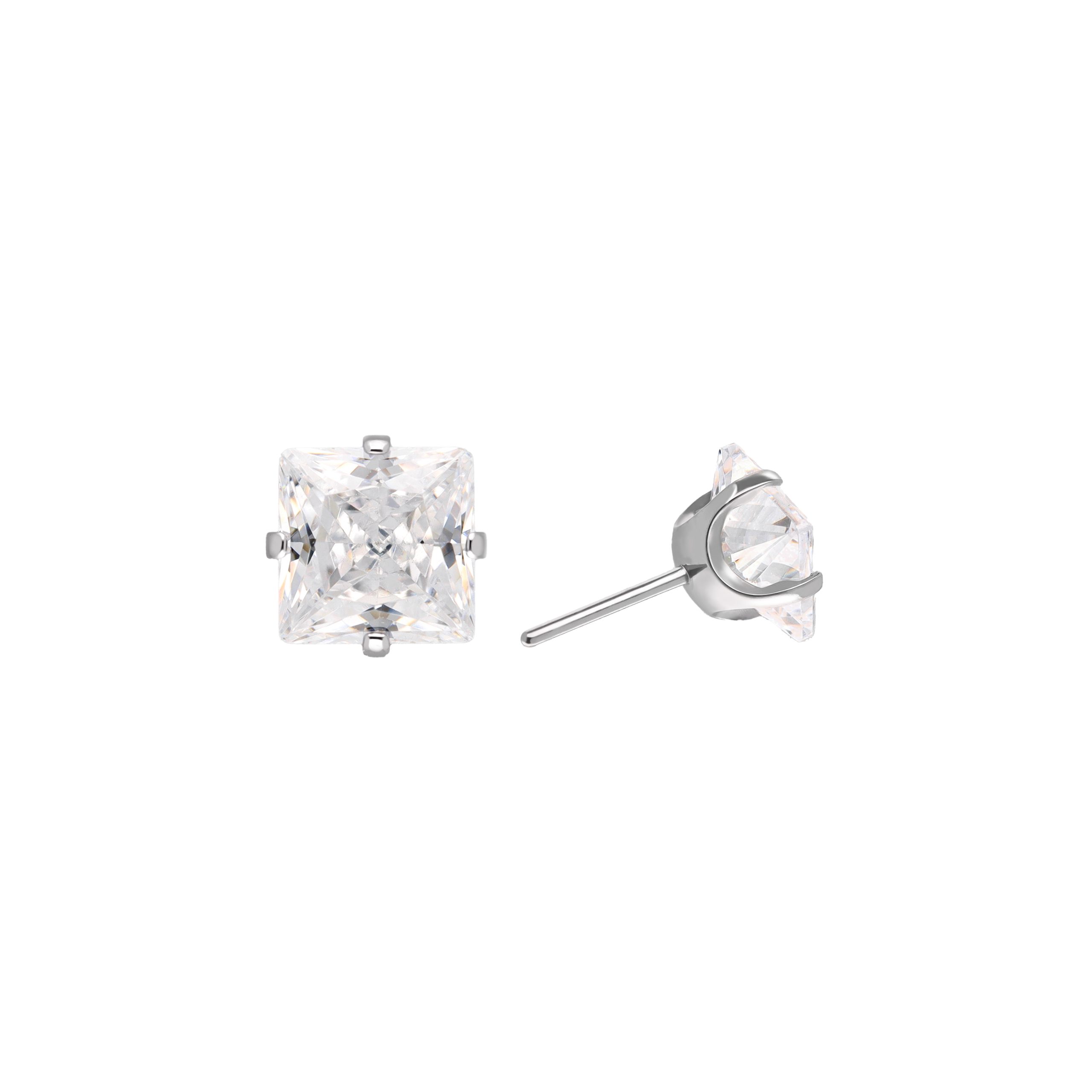
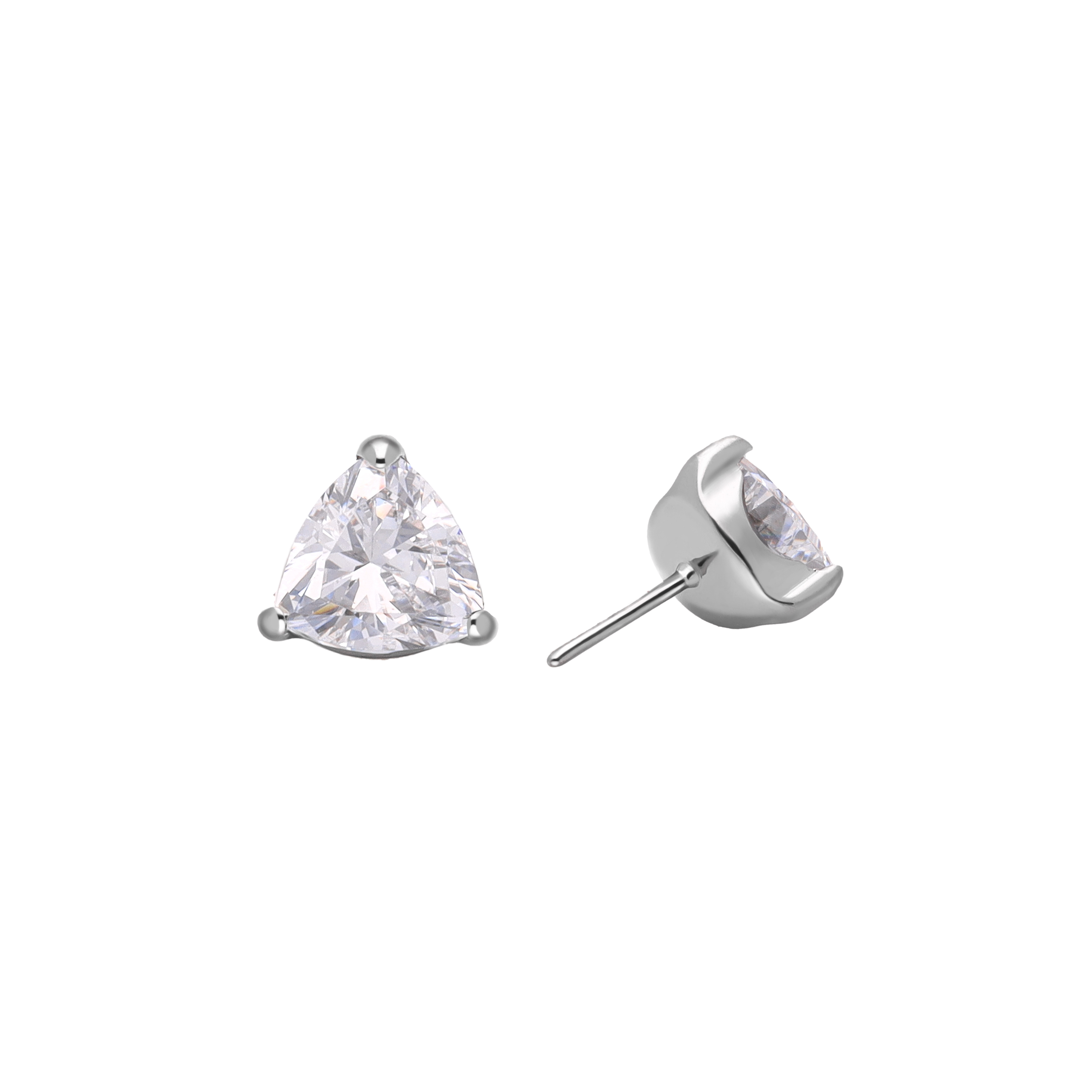
So one design can come in several top sizes. Yuki (Claw - Princess Cut) comes in 2, 2.5, 3 and 4 mm. Trinity - White Moissanite comes in Small, Medium and Big. Tremun tops are sold without post: choose the post length once, then change the look freely.
One top, several sizes
Decorative tops sized by the face, not the post
Top size is not post length. Top only: post sold separately.
Charts give a starting range. Anatomy decides.
Most ear cartilage, facial and septum piercings use 16G (1.2 mm). Navel, tongue, industrial and nipple piercings use 14G (1.6 mm). Nostrils use 18G (1.0 mm) or 20G (0.8 mm). The first post is usually longer, then a shorter post follows.
The ranges below are common professional ranges from published studio and maker size guides. They are a planning reference, not a rule. The Association of Professional Piercers (APP) asks that initial jewellery suits each client's anatomy and placement. So measure every client.
"Later" means the shorter post or smaller ring fitted after the first change period set by your studio. Rows marked "varies more" rest on fewer published sources.
By placement
Common professional ranges by placement
Common professional ranges from published studio and maker size guides. Anatomy decides.
Lobe
Helix
Forward helix (varies more)
Flat
Conch, inner
Conch, outer (varies more)
Tragus
Daith
Rook
Industrial
Ranges, not rules. Anatomy decides: measure the client.
Back to groupsNarice
High nostril (varies more)
Septum
Ranges, not rules. Anatomy decides: measure the client.
Back to groupsEyebrow
Lip / labret
Medusa
Monroe
Tongue
Ranges, not rules. Anatomy decides: measure the client.
Back to groupsNavel
Nipple
Ranges, not rules. Anatomy decides: measure the client.
Back to groupsFind the placement you pierce most, and compare it with your post tray.
Most ear work is 16G (1.2 mm). Length changes more than gauge.
Lobes are the exception: published guides list 20G to 16G. Cartilage thickness varies from client to client, so a flat or conch can need a longer post than a helix. Keep 9, 10 and 12 mm posts for thicker conch anatomy. Daith rings and industrial bars often keep the same size.
Nostrils use 20G (0.8 mm) or 18G (1.0 mm). Septums are mostly 16G (1.2 mm).
Nostril length depends on the nostril wall. The Tremun Nostril Prong comes in 18G or 20G and is listed as 16 mm long. Check the product page for how that length is defined. For the septum, 8–10 mm is the most common inner diameter.
Mouth placements use labret posts and straight barbells.
Lip, labret, medusa and monroe use a labret post, often 8–11 mm at first. Tongue piercings use a 14G (1.6 mm) straight barbell, longer at first. Plan the change visit when you fit the first post.
Navel and nipple work is 14G (1.6 mm), and the first bar often stays.
Some navel work uses 12G (2.0 mm) or 10G (2.5 mm). Nipple length depends on the client's anatomy, so the range is wide. Surface work falls outside this guide.
Rings by diameter
Septum and ear rings, sized by inner diameter
Ring sizes are inner diameter. Measure inside the ring.
Plan two lengths for every new piercing: the first post and the shorter one.
Published studio guides list a longer initial post and a shorter post later. The later post sits closer and looks neater. The trade calls this downsizing.
Downsizing keeps the gauge. Only the length changes, or the inner diameter for a ring. The top can stay the same. The septum, navel, nipple, daith and industrial often keep their first size.
The piercer decides when to change, following your studio protocol. Explain the plan at the first appointment, and record the first length on the client card.
Threadless and internally threaded posts both let the client keep the top while you change the post. See our guide to internally threaded body jewellery.
Downsizing at a glance
A missing 6 mm post turns a quick change into a second visit. Keep every later length in stock.
Measure the piercing channel and the jewellery that already fits.
Charts give you a range. The client gives you the real number. Keep one routine across your team:
For rings, use the inside jaws across the widest span. For curved bars, set the jaws on the two ends.
Round readings to 0.1 mm, and order in whole or half millimetres. One published retailer guide gives a ±0.5 mm tolerance, but no single trade tolerance exists for metal jewellery.
Reprocess your tools following your studio protocol. Use this routine to train new team members.
Before you order, find these numbers on the page.
If one item is missing, ask before you order. Screenshot this list for whoever orders for your studio.
Read the product page
Eight checks before you order a size
Find each item on the page. If one is missing, ask the supplier.
Not sure about a size on a Tremun page? Ask us on WhatsApp: +34 675 014 620
On Tremun pages, the length is the one listed on the product page. If it is unclear for your use, ask us on WhatsApp before you order.
Most size errors are label errors.
A wrong size means a re-order, and the client waits. Each mistake below has a simple fix.
| Mistake | What happens | Fix |
|---|---|---|
| Ordering by gauge only | 16G arrives as 1.2 or 1.3 mm | Compare the mm value |
| Counting the disc in the length | The post sits shorter | Measure from the disc face |
| Giving the outer diameter | The ring is too tight | Order by inner diameter |
| Reading top size as post size | Wrong post on the tray | Choose the post first |
| Mixing threadless and threaded parts | The top will not fit | Use one system |
| Stocking one length per gauge | The downsize waits | Stock initial and later lengths |
Label your trays in mm, with the gauge in brackets. Mixed labels in one drawer slow down every fitting.
Stock posts by length, rings by diameter, tops by style.
Posts and rings are the fixed base, reordered often. Tops are the variety layer, chosen by the client. Build stock from what your studio pierces most. The plan below is one starting point, based on the placement ranges above.
| Placement group | Core stock | Add as you grow |
|---|---|---|
| Ear: posts | 16G (1.2 mm) posts in 6, 7, 8 and 10 mm | 5 mm; 9 and 12 mm for thick conch |
| Ear: rings | 16G rings in 7, 8, 9 and 10 mm | 6 mm; 12–14 mm for outer conch |
| Naso | 20G and 18G nostril pins; 16G septum rings, 8 and 10 mm | Nostril rings, 6–10 mm |
| Face & mouth | 16G posts in 6, 8 and 10 mm; 16G curved bars, 8 mm | 11–12 mm posts; 14G posts |
| Body | 14G (1.6 mm) curved bars in 8, 10 and 12 mm; 14G straight bars | 12G and 10G curved bars |
| Larger gauges | Only what your clients ask for | 10G to 4G circular barbells |
Example starter plan, not a rule. Adjust to your clients.
Tick the sizes you already stock; the gaps show what to order. Then keep these rules:
There is no minimum order at Tremun. You can fill one missing length with a few pieces.
Posts by length
The posts behind every top
Length as listed on each product page. The disc is a separate size.
One catalogue, every common size, decorative tops first.
Tremun Piercing is a B2B piercing jewellery wholesaler for professional piercers and studios, based in Barcelona, Spain. More than 3,500 studios trust Tremun.
Our titanium is ASTM F-136, DFARS-compliant and sourced from France. Read what ASTM F-136 titanium means and see our mill certificates.
Our 18K clickers and 18K tops are designed and made in Italy. Each one is hand polished, with a mirror finish.
Tremun · Titanium ASTM F-136 and 18K gold
Decorative pieces in real sizes
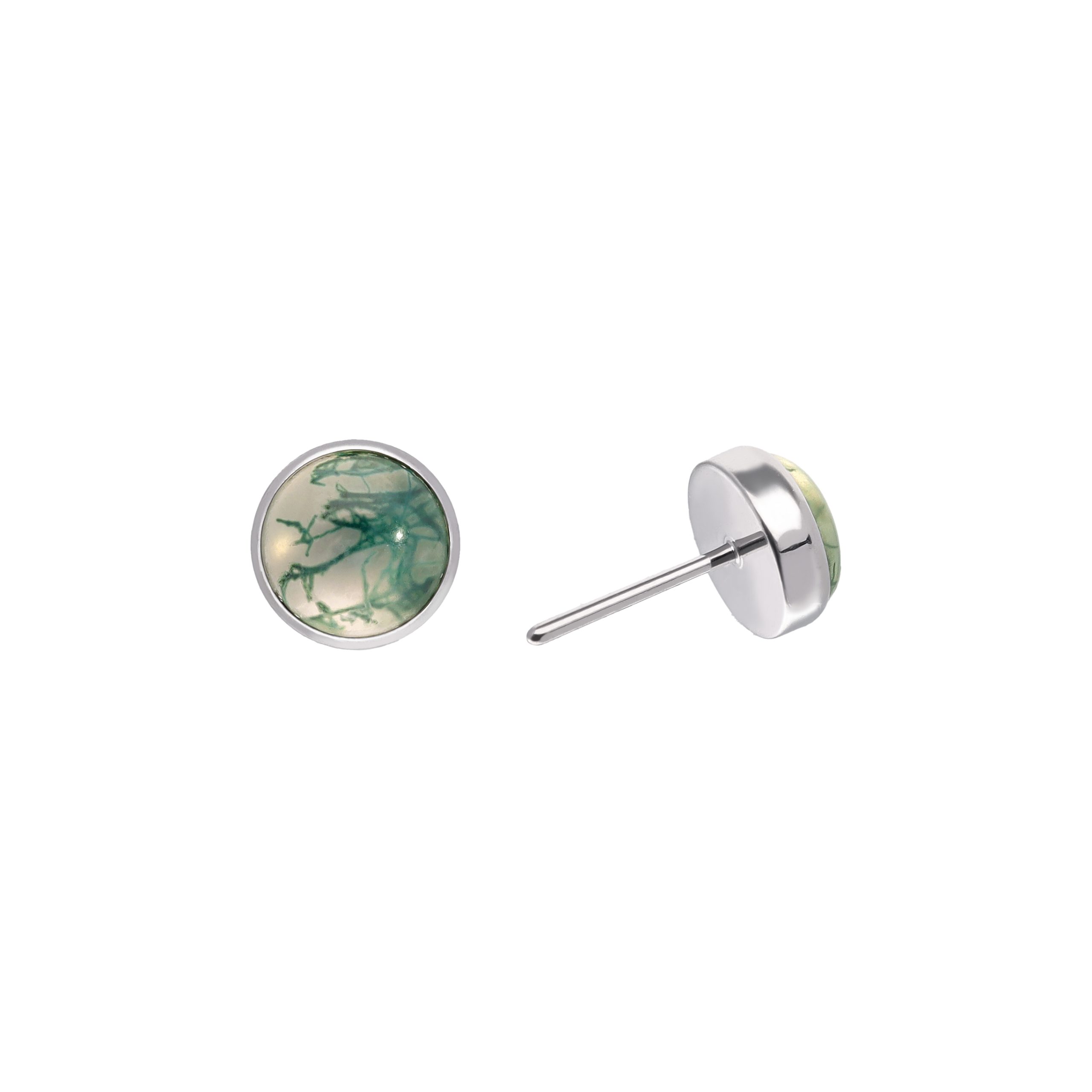
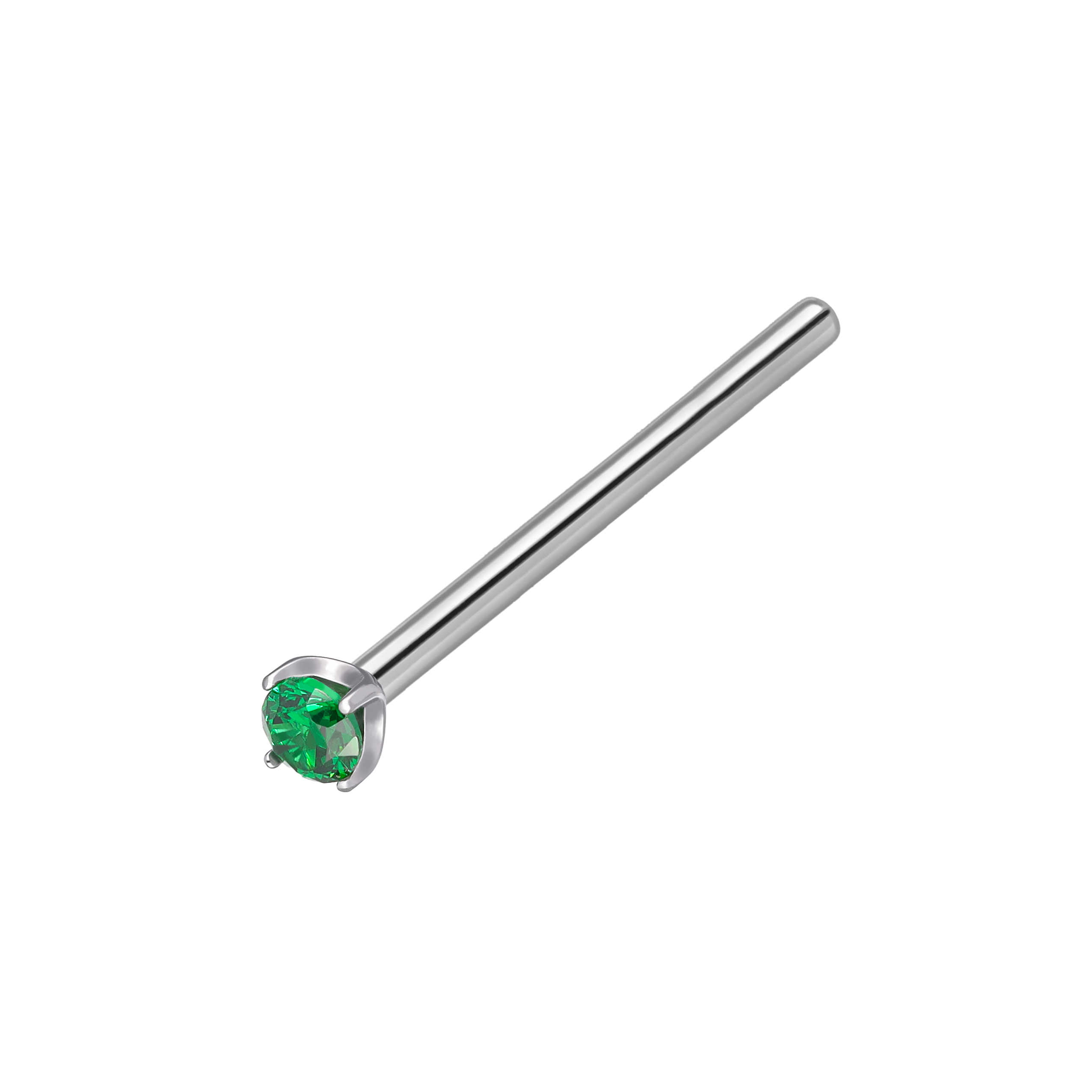
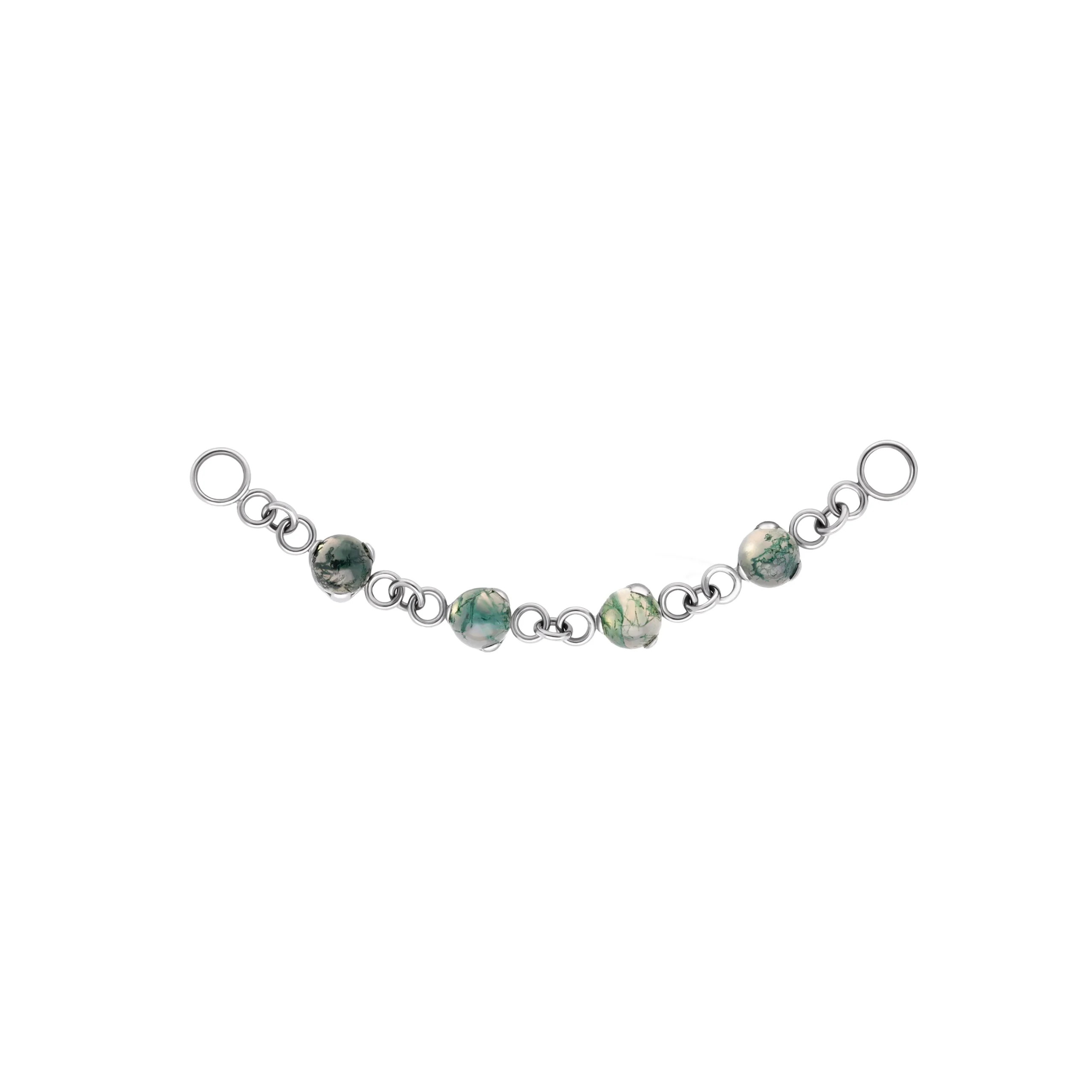
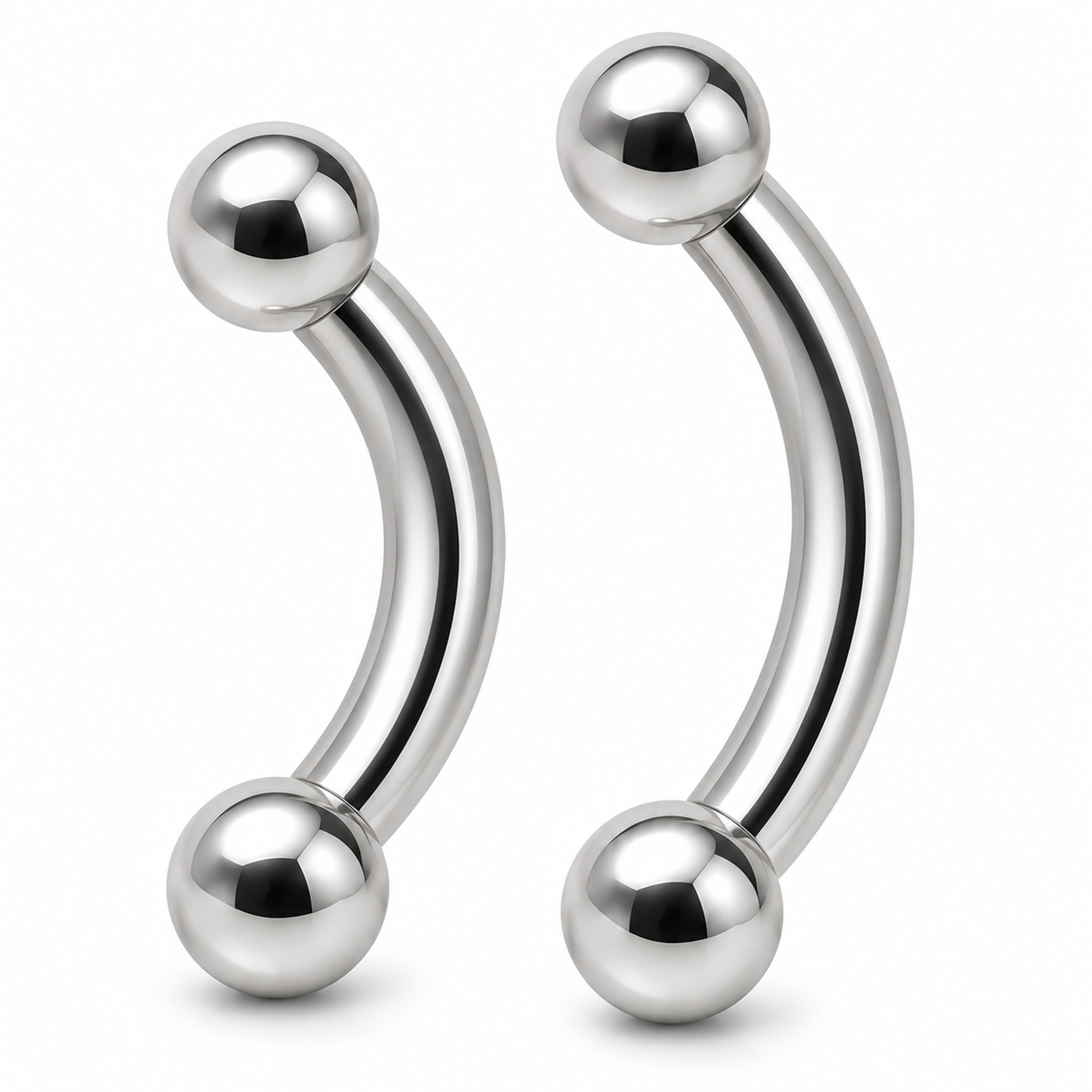
Tops, a nostril pin and a chain, then one larger-gauge bar.
Tops are sold without post. Prices are visible to approved accounts.
For professional piercers
See prices for every size in the Tremun range
Tremun sells only to professional piercers and studios. Accounts are approved within 24 hours. Then prices for every gauge and length are visible.
16G is 1.2 mm in piercing jewellery. The exact American Wire Gauge value is 1.29 mm, so some labels round it to 1.3 mm. Both labels describe the same nominal size. 16G is the common gauge for ear cartilage, septum, eyebrow and lip. When you compare suppliers, read the mm value on each product page.
A nostril stud is usually 20G (0.8 mm) or 18G (1.0 mm). Published guides list initial posts of about 6.5–8 mm and later posts of 6–7 mm. The thickness of the nostril wall decides the length, so measure each client. The Tremun Nostril Prong comes in 18G or 20G, listed as 16 mm long.
Labret length is the wearable length of the post. Measure from the inner face of the flat disc to the base of the top. The disc is not counted, and neither is the top. Disc size is a separate figure, often 3 or 4 mm. Check how each product page defines its length before you order.
Measure a curved barbell in a straight line between the inner faces of the two balls. Do not measure along the curve, and do not count the balls. Navel bars follow the same rule. Use callipers, zero them first, and round the reading to the nearest 0.1 mm.
Ring size is the inner diameter, measured across the inside of the ring at its widest point. The outer diameter adds the metal on both sides. For example, an 8 mm ring in 1.2 mm (16G) measures 10.4 mm across the outside. Clickers and circular barbells follow the same rule.
Most septum rings are 16G (1.2 mm), with 18G and 14G as alternatives. Common inner diameters run from 6 to 10 mm, and 8–10 mm is the most common range. The septum often keeps the same size. Anatomy decides, so measure each client. The Septum Clicker Tina White is 16G with a 10 mm diameter.
A longer initial post, then a shorter post later, is common professional practice. Published studio and maker guides list both lengths. Your studio protocol sets the reasons and the timing. The gauge stays the same; only the length changes. Explain this at the first appointment, so the client expects a shorter post later. Record the first length in mm.
The piercer decides when a post is downsized, following the studio protocol. This guide gives no fixed timings, because anatomy and practice differ. At the change, keep the gauge and the thread system, and fit a shorter post. The top can often stay. Keep every later length in stock, so the change happens in one visit.
Never assume it. Gauge, pin and thread details differ between makers, so a top from one brand may not fit another brand's post. Tremun does not promise cross-brand fit. Use tops and posts from the same system, and check the product page. For questions about a Tremun top or post, ask us on WhatsApp: +34 675 014 620.
Tremun sells only to professional piercers and studios. Register at tremunpiercing.com/registration/. Accounts are approved within 24 hours, and then prices are visible. There is no minimum order, so you can fill single size gaps. Shipping is free with DHL Express from €350 (VAT incl.). Tops are sold without post.
The Tremun Team
 English English
 Croatian
 Dutch
 French
 German
 Italian
 Romanian
 Spanish
 Ukrainian